• Skip to main content
  • Skip to primary navigation
  • Skip to primary sidebar
  • Skip to footer
LOHP

LOHP

Safe Jobs. Healthy Lives.

  • Facebook
  • Instagram
  • LinkedIn
  • Home
  • About
    • About Us
    • Staff
    • Partners & Funders
    • LOHP History
    • Healthy Jobs
  • Our Work
    • What We Do
      • Training for Action
      • Communication Campaigns and Educational Materials
      • Community-Engaged Research
      • Policy Analysis
      • Academics and Student Internships
    • Featured Areas
  • Upcoming Trainings
  • Materials & Resources
    • Educational Materials
      • Fact Sheets and Tools
      • Curricula and Training Guides
      • Small Business Resources
      • Materials By Language
      • Collective Bargaining
    • Research and Policy
    • Webinars
    • Resource Center
  • News
    • In the News
    • LOHP Newsletters
  • Contact Us
  • Donate
  • Show Search
Hide Search

Community-Engaged Research

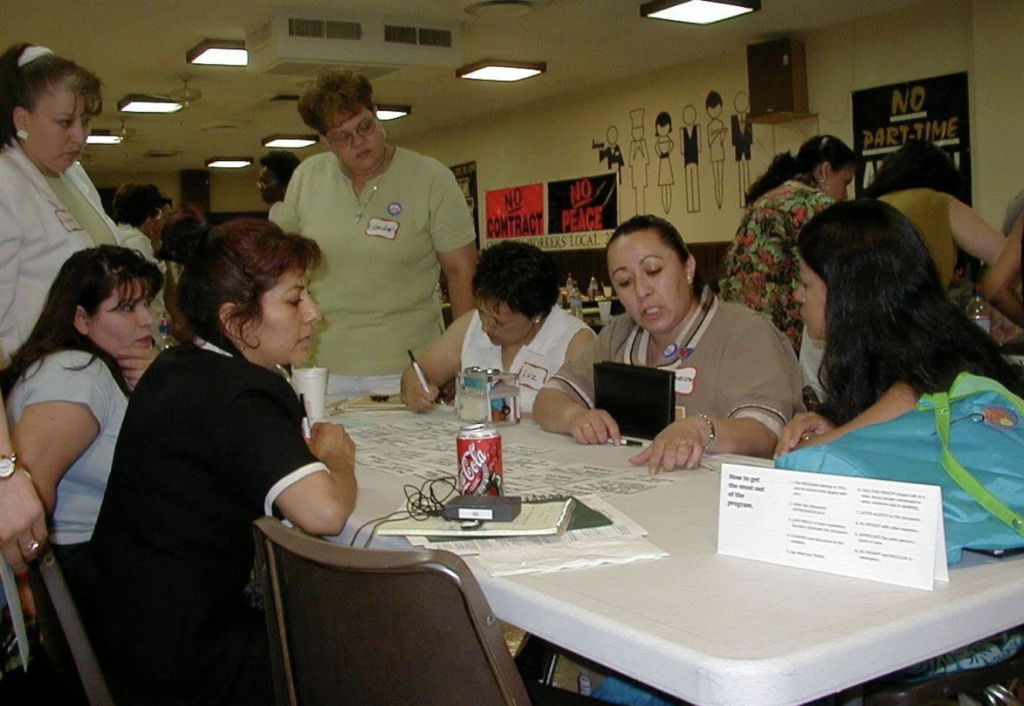
LOHP has a strong history of building and facilitating community-university research partnerships. Our goals are to engage the workers and communities who are most impacted by the issues being investigated and to promote ways for research findings to be translated into action.

As part of the Center for Occupational and Environmental Health, we help bring the resources of the university to communities to address occupational and environmental health concerns. We emphasize a participatory research approach to involve workers and community members in the development of research questions, approaches, analysis, and dissemination of findings. We have developed “Research to Practice” resources to help occupational safety and health researchers strategically think about how to move their research findings into the world for impact.

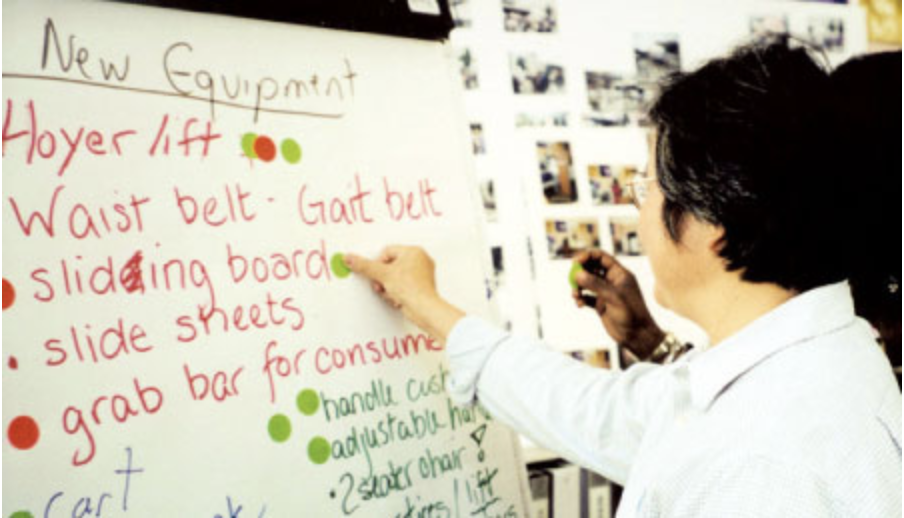
We conduct qualitative research through focus groups and key informant interviews to better understand perceptions and experiences that influence worker health, and to do formative research as part of intervention design and evaluation. We also support worker organizations in developing research questions or conducting surveys or interviews to better document a problem or understand the extent of a problem. 

LOHP participates in national committees initiated by the National Institute for Occupational and Safety and Health (NIOSH) to set and inform a national occupational health research agenda (NORA).  These are the Health Care and Social Assistance and Healthy Workforce Design committees. 

Examples of projects:

Nail Salons Worker Leadership Program

We are collaborating with the CA Healthy Nail Salon Collaborative on community-based participatory research focused on worker leadership development and reducing harmful chemicals that may put workers at risk for breast cancer. Together with Vietnamese nail salon workers, we are building the partnership, designing focus groups and interview research, and developing a leadership development curriculum. Workers bring powerful stories from their experiences as refugees, highlighting their resilience and readiness to improve working conditions in nail salons.

Chinatown Restaurant Workers

In partnership with the Chinese Progressive Association, other researchers, and the local health department, we carried out a community-based participatory research project that exposed sweatshop conditions in restaurants in San Francisco’s Chinatown. We helped train and engage restaurant worker partners in all aspects of the study, and they conducted over 400 surveys in the community. The findings, which documented numerous hazards and labor violations including widespread wage theft, were used to achieve ground-breaking wage theft policy change and enforcement success. 

Workload in the Janitorial Industry  

In response to growing concern about substantial workload increases for janitors, LOHP collaborated with SEIU-USWW to conduct qualitative research through six focus groups in California. Findings document excess workload that manifests in myriad ways, including the increase in density within floors as well as in the number and complexity of tasks, the unrealistic quantity of tasks for the hours worked, and the number of hours distributed across fewer workers. Workers described how a high workload environment stems from, and can reinforce, tense employer-worker and inter-worker dynamics, and how the increased workload impacts physical health resulting in physical injury as well as work-related stress and other mental health outcomes.

High-Quality Health and Safety Training for Career Technical Education (CTE) programs

Reaching new and younger workers entering the construction workforce is critical to ensuring that safe work practices are learned early in a person’s career. Many enter the field through CTE construction programs at the high school or community/technical college level. LOHP partnered with West Virginia University and conducted a study to assess the extent and quality of health and safety education in these programs, and to identify what instructors and administrators consider essential elements for effectiveness. This study resulted in materials that CTE programs can use to strengthen their program’s safety and health systems to prepare their students.


Primary Sidebar

Button - Return to Collective Bargaining Home

On This Page

  • Examples of projects:
    • Nail Salons Worker Leadership Program
    • Chinatown Restaurant Workers
    • Workload in the Janitorial Industry  
    • High-Quality Health and Safety Training for Career Technical Education (CTE) programs
  • About Us
  • Staff
  • Partners & Funders
  • LOHP History

ucberkeleylohp

We are a #publichealth program that promotes safe, healthy, & just workplaces through training, outreach, and research.

We held a workshop with laborers and domestic work We held a workshop with laborers and domestic workers in San Francisco on fall protections. This is part of a  health and safety series in partnership with @nuevo_sol_sf, a member-led immigrant organization. 

Llevamos a cabo un taller sobre la protección contra caídas para jornaleros y trabajadoras del hogar en San Francisco. Este taller forma parte de una serie sobre salud y seguridad realizada en colaboración con @nuevo_sol_sf, una organización de inmigrantes liderada por sus propios miembros.

#protectworkers #healthandsafety
We hosted the Bay Area cohort of the Occupational We hosted the Bay Area cohort of the Occupational Health Internship Program @ohip.aoec for a welcome brunch last month at our offices. 

LOHP is hosting eight student interns from around the country this summer. 

Undergraduate, graduate and medical students will be working in the Bay Area to learn about the field of occupational safety and health from those with most at stake: working people. Students are working on wide-reaching projects that include workplace violence prevention with @seiu1021, understanding the impact of silicosis with the California Department of Public Health, studying chemical exposure risks for transit workers with @ATU and mental health support with @liunalocal67. The interns were chosen from a competitive pool of over 90 applicants from fields that range from public health to environmental science, and labor studies to medicine. 

We are truly inspired by their commitment and leadership and can't wait to learn from their experience. Thank you to our partners. 🔥 #OHIP2026 #workersafety #futureleaders
El Calor es un peligro serio. ☀️ Por favor, compar El Calor es un peligro serio. ☀️ Por favor, comparta esta información. #protegeralostrabajadores
Heat illness is preventable. Please share. #Protec Heat illness is preventable. Please share. #ProtectWorkers
We rely on partnerships to do our work. TY Labor a We rely on partnerships to do our work. TY Labor and Community Advisory Committee! #solidarity  #WorkerSafety
So much summer outreach! We’ve been training stude So much summer outreach! We’ve been training students, educators of all types, unions and spreading the word at job fairs and summer events. All workers have the right to safe jobs. 
☀️☀️☀️☀️

Image descriptions:
1.	An LOHP staff member sits under a canopy with signs that read: “Labor Occupational Health Program” and “Safe Jobs. Healthy Lives.”
2.	Facilitator looks on while a teacher sitting at a table describes her experience. 
3.	Facilitator gestures to a group of college students in front of a colorful mural.
4.	Facilitator and a group of school staff stand in a small circle in front of a screen that reads “Agree or Disagree? Most injuries and illnesses on the job happen because workers make mistakes or are careless?”
Follow on Instagram

Footer

COEH Logo SOPH Logo UCB Logo
  • Facebook
  • Instagram
  • LinkedIn

Copyright © 2026 · LOHP and The University of California Regents · Privacy Policy